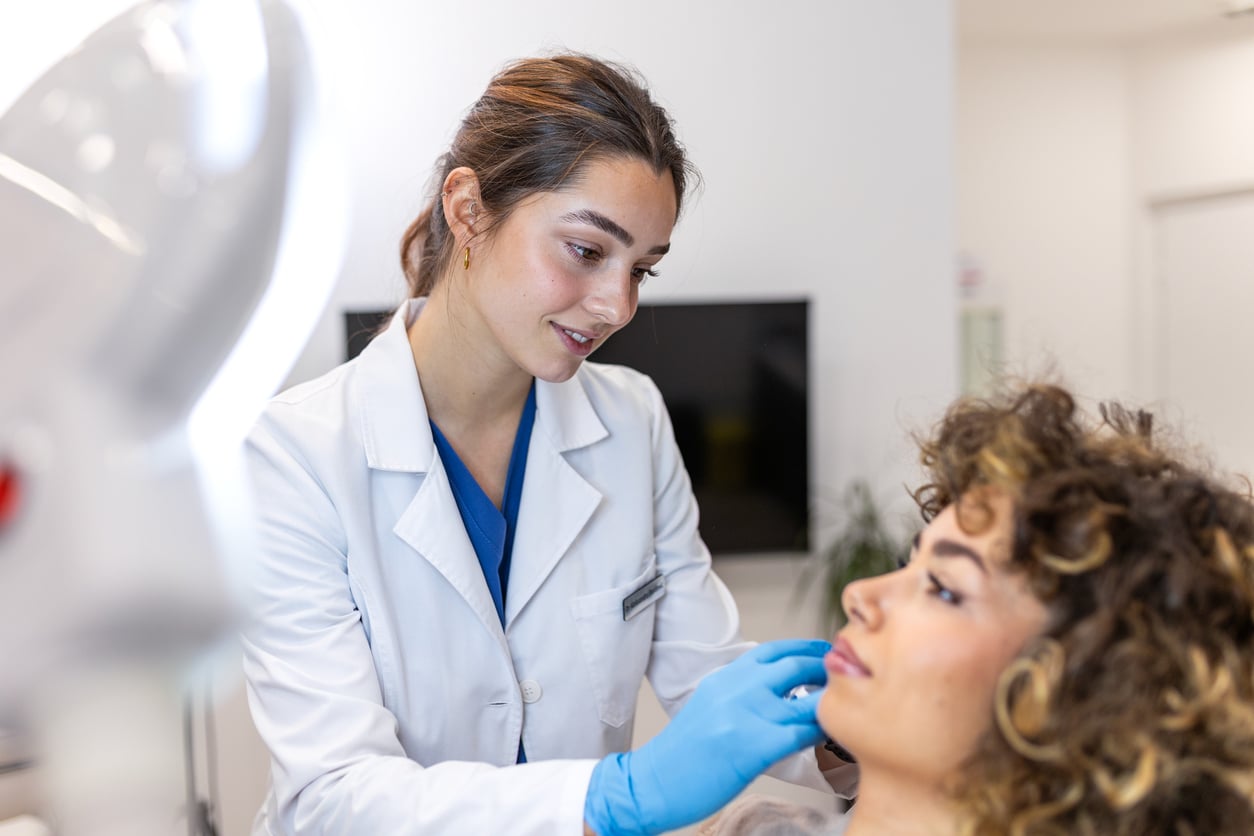

Is It a Sunspot or Actinic Keratosis? When a Rough Spot Needs a Dermatologist
A brown mark on sun-exposed skin can be harmless, but texture can be an important clue that it deserves a closer look. Our team at Dermatology Consultants of Short Hills performs skin cancer screening in Short Hills and Morris Plains, New Jersey, and helps patients sort out ordinary sun damage from changes that need medical attention. Dr. Richie Lin is a board-certified dermatologist whose specialties include skin cancer detection and removal, including Mohs surgery.
How Do Sunspots and Actinic Keratoses Differ?
Sunspots, also called solar lentigines, are flat areas of increased pigment that tend to appear after years of ultraviolet exposure. Once a dermatologist has confirmed that a mark is benign, it is generally considered a cosmetic concern.
Actinic keratoses, or AKs, are precancerous growths caused by accumulated UV damage. They often feel rough, gritty, or scaly and commonly develop on areas such as the face, ears, scalp, hands, and forearms. Sometimes the texture is easier to notice than the color.
Because harmless marks and medically important lesions can look similar at first glance, our information on laser sunspot removal explains why pigmented areas should be identified before cosmetic treatment.
Can You Tell by Looking at the Color?
Not reliably. An AK may be pink, red, tan, brown, gray, or close to your natural skin tone. A sunspot is usually flat and evenly pigmented, but color alone cannot confirm what a lesion is.
Changes over time matter too. If an area becomes larger, changes color or shape, begins bleeding, or simply looks different from your other spots, it should be checked. The ABCDE warning signs of melanoma are useful to know, and new or changing growths should not be diagnosed from appearance alone.
Why Does an Actinic Keratosis Need Treatment?
An AK is not the same as skin cancer, but some can progress to squamous cell carcinoma. Dermatologists cannot reliably predict which individual lesion will become cancerous, so persistent rough or scaly areas on sun-damaged skin should not simply be dismissed as age spots.
Once we know a mark is harmless sun damage, cosmetic care can be discussed. There are several treatments for sun-damaged skin that can improve pigmentation and other visible signs of photoaging.
Have a Suspicious Spot Checked Before Treating It
If a new or changing area has caught your attention, contact us to arrange an evaluation with Dr. Richie Lin and our team at Dermatology Consultants of Short Hills. We see patients in Short Hills and Morris Plains, NJ. Call 973-232-6245 to find out what the lesion is before deciding whether it needs medical care or cosmetic treatment.