
Post-Inflammatory Hyperpigmentation After Acne: Why Dark Spots Linger
A breakout can disappear and still leave behind a flat brown, gray, or dark mark that lasts far longer than the pimple itself. In Short Hills, New Jersey, our team at Dermatology Consultants of Short Hills treats acne and the discoloration that can follow inflamed breakouts. Dr. Amanda Dunec is a board-certified dermatologist who devoted a year of medical school to dermatology research in this area, graduated with Special Distinction in Dermatology, and has specific training in caring for patients with skin of color.
Why Does Pigment Remain After a Pimple Heals?
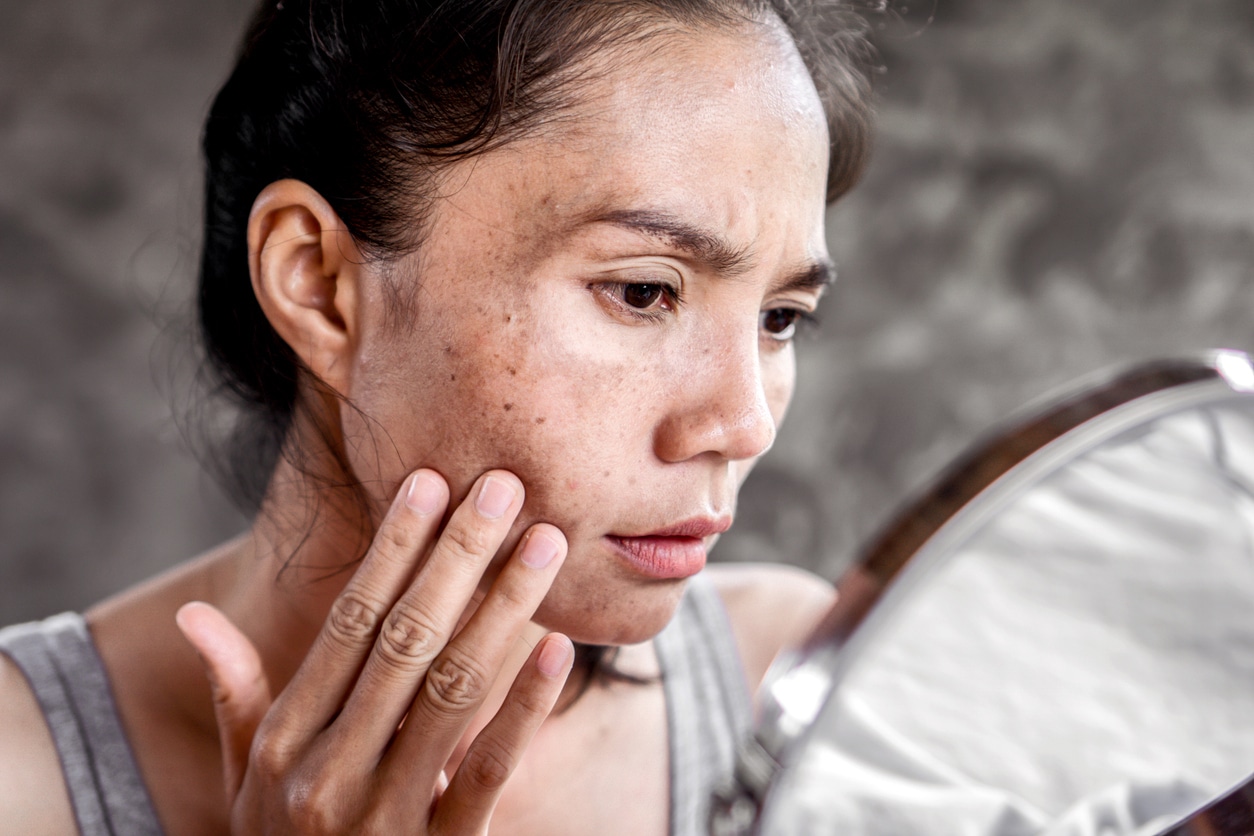
Post-inflammatory hyperpigmentation, or PIH, develops when inflammation prompts the skin to make extra melanin. Unlike a true acne scar, PIH is flat. Textural scars change the surface of the skin by creating depressions or raised areas, while PIH changes color without altering the skin’s contour.
This distinction can help explain why a spot may still be visible even though the original blemish has healed. PIH can occur across skin tones, but brown or bluish-gray discoloration is often especially noticeable in medium-to-deep complexions.
Preventing New Dark Spots Starts With Acne Control
Trying to fade old marks while new breakouts continue can become a frustrating cycle. Treating active acne helps reduce the inflammation that creates new discoloration. Picking or squeezing pimples can add irritation and raise the risk of both pigment changes and permanent scarring.
Our article on preventing acne scars in teenagers discusses why early care and leaving blemishes alone can help limit lasting skin changes. Daily sun protection also matters because sun exposure can make areas of excess pigment more noticeable and slower to fade.
When In-Office Treatment May Help
Some post-acne discoloration gradually fades with time and dermatologist-directed skin care. When spots persist, an in-office procedure may be worth discussing after active breakouts are under better control.
Chemical peels can be used for acne, acne scarring, irregular tone, and pigment concerns. Our guide to chemical peels for acne also discusses post-breakout discoloration. Microneedling may be useful when pigment changes occur along with textural scars, while laser skin treatments can be considered for certain pigmentation irregularities and acne-related texture.
These procedures are not interchangeable, especially for patients with darker skin tones. An overly aggressive peel, laser, or home treatment can irritate the skin and contribute to new pigment changes. The right approach depends on the type of discoloration, your complexion, the presence of scarring, and how active your breakouts remain.
Get Help With Lingering Post-Acne Discoloration
If breakouts keep leaving dark spots or older areas are not fading as expected, our team can determine if you are seeing PIH, true acne scarring, or a combination of both. For help sorting out lingering discoloration, contact us to request an appointment with Dr. Amanda Dunec and Dermatology Consultants of Short Hills in Short Hills or Morris Plains, New Jersey. Call 973-232-6245 to discuss your skin concerns with our dermatology team.